ATS Resume Checks
Each scan reviews your resume, but these checks do not impact the overall score of the scan.
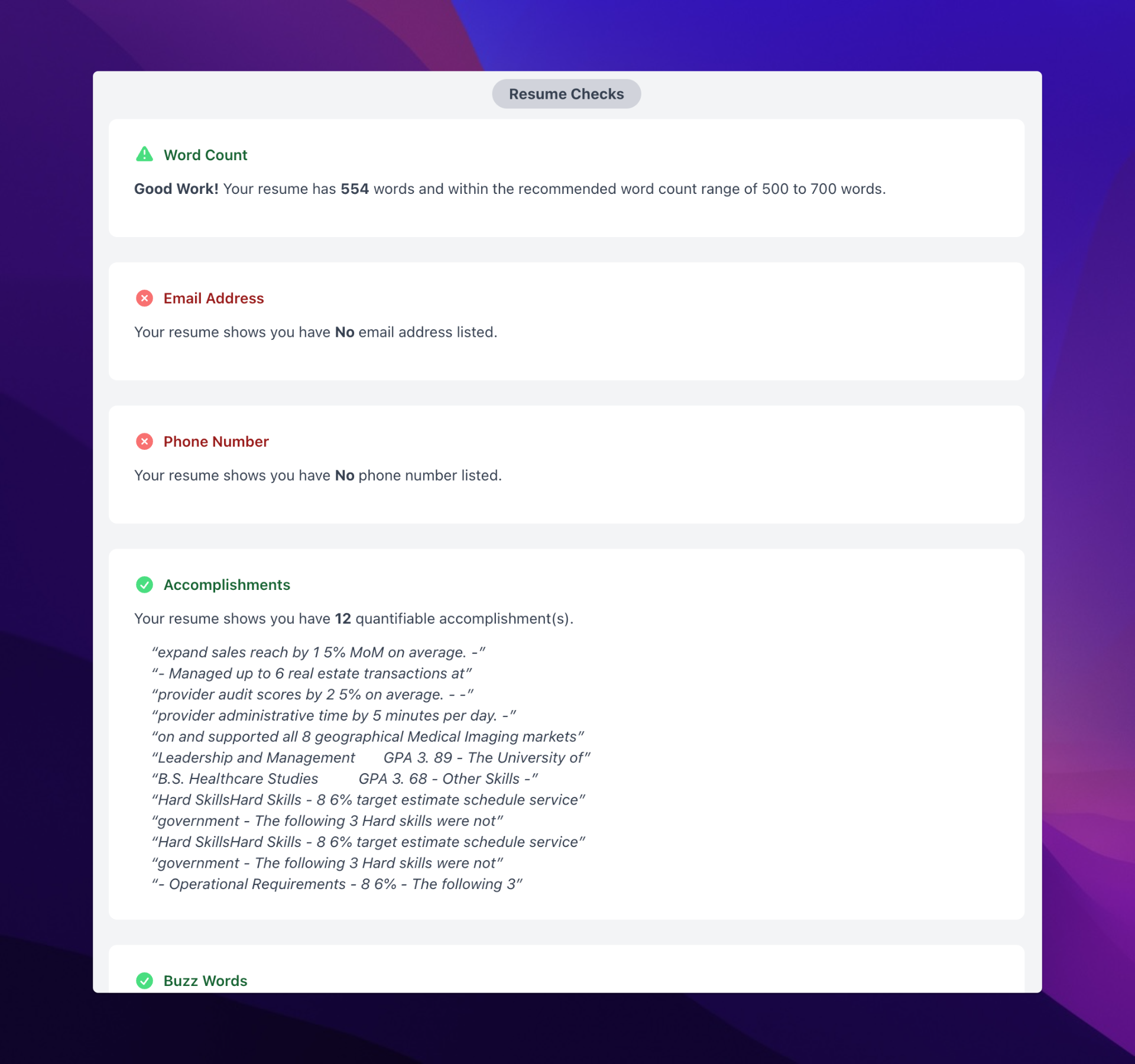
Word Count
What it does: This check analyzes the total number of words in your resume. Typically, resumes should be concise, usually between 500 to 700 words.
Why it's important: Resumes should be crafted to be process quickly. Resumes that are too long might overwhelm the human reader, leading to missed or overlooked information. On the other hand, overly short resumes may not include enough relevant details. If you have a long career or are applying for specialized roles (such as federal jobs), a longer resume might be acceptable.
Email Address
What it does: This check verifies if an email address is included in your resume.
Why it's important: Including a valid email address is critical for communication between you and potential employers. ATS systems often check for this basic piece of contact information to ensure that your resume meets the minimum standards for professional submissions. Without it, your resume may be flagged as incomplete or unprofessional.
Phone Number
What it does: This check verifies if your resume contains a phone number.
Why it's important: Just like an email address, a phone number is a standard method of contact. ATS systems expect a phone number to be listed, as it helps recruiters reach you quickly. If missing, it may prevent recruiters from contacting you, potentially causing your resume to be overlooked or rejected.
Accomplishments
What it does: This check identifies quantifiable accomplishments (e.g., “Increased sales by 30%”) within your resume.
Why it's important: Including specific, measurable achievements is crucial for standing out. Accomplishments provide concrete evidence of your skills and success in previous roles, making it easier for ATS to match your experience with the job requirements. Quantifying your achievements helps both ATS systems and recruiters understand the real impact you've had in past positions.
Buzz Words
What it does: This check identifies buzzwords or overused jargon (e.g., “24/7,” “multinational”) that may not add substantial value to your resume.
Why it's important: ATS systems are designed to focus on skills, experience, and accomplishments that are relevant to the job description. Buzzwords often don’t convey specific skills or accomplishments, making them less useful in a resume. Using these terms may even lead to your resume being penalized or misunderstood. Replacing buzzwords with precise skills and experiences ensures that your resume stays relevant and effective.
Verb Choice
What it does: This check analyzes the verbs used in your resume, identifying weak or passive verbs (e.g., “led,” “built,” “wrote”) that could be replaced with more impactful action verbs.
Why it's important: Action verbs demonstrate leadership, initiative, and accomplishment. ATS systems look for strong, direct language that shows what you’ve actively contributed to in previous roles. Weak verbs may fail to highlight your capabilities fully, so replacing them with more powerful alternatives helps improve your resume’s effectiveness and match score.
First-Person Language Check
What it does: This check identifies the use of first-person pronouns (e.g., “I,” “my,” “me”) in your resume.
Why it's important: ATS systems and recruiters prefer resumes written in a professional, impersonal tone. First-person language can make your resume seem less formal and clutter your content with unnecessary words. Avoiding first-person pronouns ensures your resume maintains a clear, direct, and professional tone, making it easier for humans to parse and evaluate your information.
Date Formatting
What it does: This check ensures that all dates (e.g., employment dates, education dates) follow a consistent and standard format (e.g., February 2010 - June 2014).
Why it's important: ATS systems use dates to calculate your years of experience and evaluate the relevance of your background. If dates are formatted inconsistently or in a non-standard way (e.g., “Feb 2010 – 6/14”), the ATS may have difficulty processing your resume, leading to errors in experience calculations or even failure to parse important data. Consistent date formatting ensures that your resume is accurately evaluated.
Why These ATS Resume Checks Matter
Each of these checks ensures that your resume is optimized to meet both the ATS and Human readers. The goal is to make your resume easy to parse, accurately reflect your career, and help you stand out to recruiters and employers. Proper formatting, concise content, clear contact information, and relevant achievements are all key components of a resume that ATS systems can accurately assess and score. By adhering to these checks, you increase the likelihood that your resume will make it through the ATS filters and be reviewed by hiring managers.